


I’m surprised when I meet someone who doesn’t know that most software we use on our desktops today is available for free. People get used to paying for something they rely on, even if that cost increases in ridiculous ways.

The one-time cost of $39.99 for an application has become $400 or more if you subscribe to it for 10 years. I’ve been using word processors since 1995. Free or cheap trials quickly balloon into expensive ongoing payments that you forget about until months…or years later.
I thought you wanted me to continue paying $19.99 a month for two years for that game.
—Your bank account
Many applications have free alternatives
Thanks to open-source software, most of the applications you install have been available for free–for years. The Free Software Directory has a huge list, but here are a few:
Wordprocessing, spreadsheets, presentations: LibreOffice
Web browser: FireFox
Email: Thunderbird
Video editing: kdenlive
Audio player/editor: Audacity
OS: Linux (You don’t have to use Windows or Mac)
And thousands more
The open-source movement arose out of concerns for privacy, security, and forced dependence. If you regularly use an application, you are encouraged, but not required, to make a donation to the developer or company providing it.
Here’s the history of open-source and free software from Wikipedia.
Fun Fact
The award-winning animated movie Flow was made using Blender, a free animation software. Such applications can be of very high quality and have robust feature sets.
But as more solutions move to the cloud, the need to download software has decreased. Companies like Microsoft attract and retain customers by giving samples away. Microsoft made its Office application free but limited its features.
The Google Drive Suite, which is free for individual users, includes all of the traditional applications like word processing, spreadsheets and more. You’re now in their ecosystem and they know what you want.
To use these cloud applications, you just need a computer, browser, an internet connection, and have to trust Alphabet/Microsoft with your secrets.
You can make your own software
A newer development, made possible by state of the art (SOTA) LLMs is vibe coding—using a chatbot to help you make your own applications.
Rick Rubin, legendary music producer explains it in this short video.
Even if you’ve never written a line of code, you can now use LLMs/chatbots to create applications or scripts that run on your computer. You explain to a chatbot the application you want to create and it writes the code for you.
Incidentally, this approach can rely heavily on libraries of functionality provided by open source developers.
Some things I’ve made with vibe coding:
A PDF editor to open a Korean doc and send pages to OpenAI for translation to English
Scripts to:
Extract data from files (vCard, PDF, Docx)
Connect to my online email and extract important, actionable info
Find and delete duplicate files on disk
Convert image files from JPEG to PNG
Use services via APIs to do things like transcribe a recording
This is my new hobby and I love it. But you quickly realize how much work it is to make a robust application.
Open-source AI is here
Fortunately, the open-source community continues to provide solutions that now leverage AI. You can test and use open-source models and features. Hugging Face is currently the leading site for this initiative.
Angel Poon has an excellent Hugging Face tutorial on Youtube to show you how to get started.
Will you even need your own software?
For better or worse, AI/Chatbots may make local applications unnecessary.
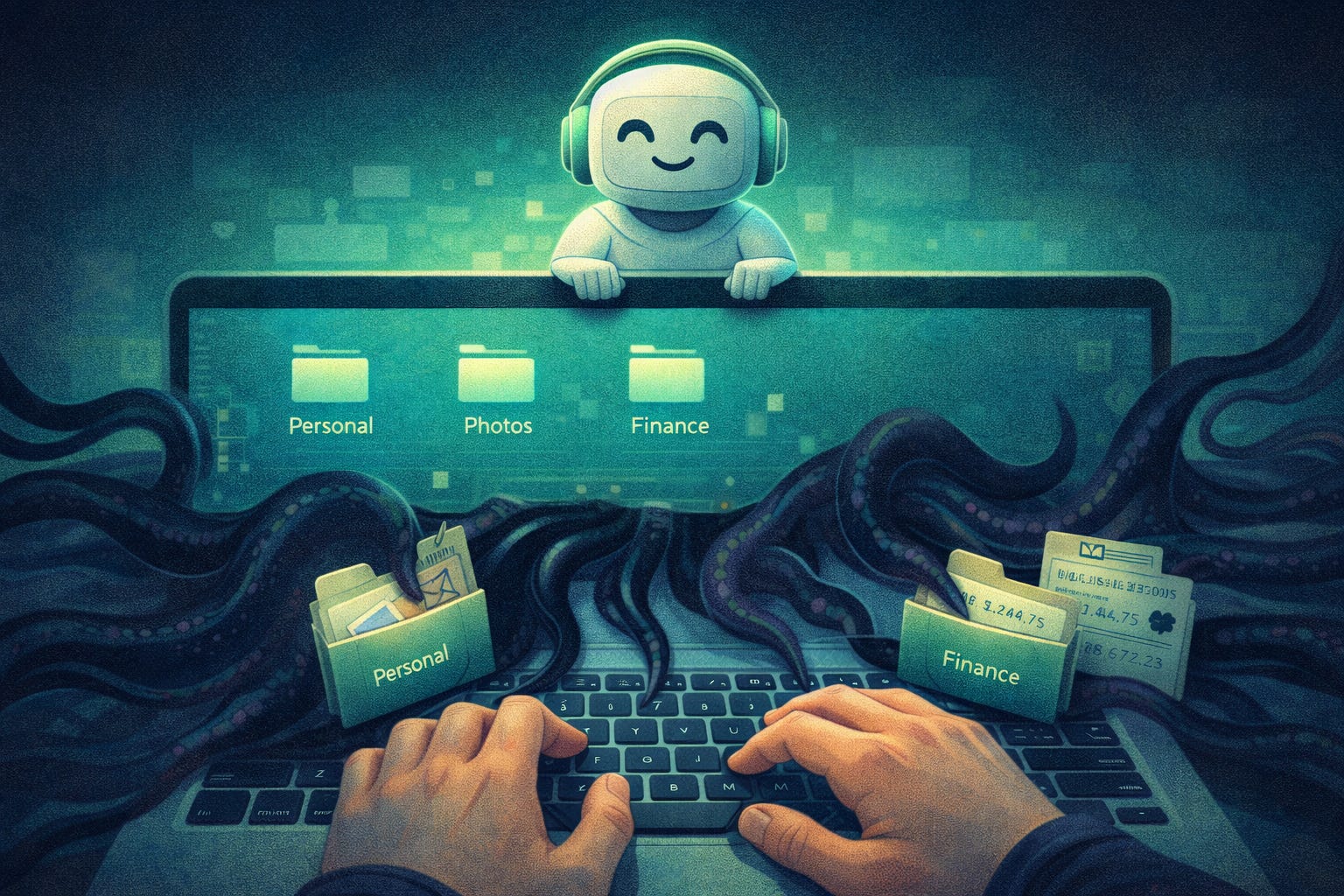
Is this good?
I don’t know, but it’s inevitable and it’s making some SaaS, software as a service, companies very nervous, and briefly dented your 401K statement.
Last week, Anthropic, a major AI company, released an update to their chatbot, Claude. This release rattled the SaaS markets and destroyed a trillion dollars of market value. Why? Anthropic added features in their solution, like legal reviews, and finance capabilities, that are the core features other companies provide. Yikes. Here’s a Yahoo Finance story with details.
Many features are bundled in the free and cheap monthly chatbot plans so the average user doesn’t think of these “features” as different applications. You can write, summarize, organize info, and make images for starters.
One day, your annual family budget will include line items for Bob, a single chatboth that manages specialized AI agents that provide ongoing health, legal, and finance guidance.
Or you’ll have to endure ads within your chatbot.
Bottom line
AI hype can be unrelenting and depressing, but the technology can be empowering and liberating. Watch The Thinking Game on YouTube to be inspired. One company is making AI-powered solutions that help researchers, scientists, and doctors to find treatments and cures.
My biggest fear is less about Skynet and more about all the unseen costs. OpenAI and other big AI companies have been sued for scraping copyrighted data. Even if you pay a monthly fee, how secure is your data, really?
The latest technical revolution will forever change how we develop and access software. The implications for personal privacy and freedom are huge.
As a parent
More pressing as a parent is my concern for jobs or careers for young people. In the next two years, an AI/chatbot may not replace your kid at work, but someone who is tech-savvy and can wield these powerful tools most certainly will.
The complaint, “it’s not human,” will make them look like a Neanderthal. They will lose their position to someone who can do the work in 1/10 the time and at a fraction of the cost.
Don’t be these guys:
“Why would anyone want digital photos?”--a Kodak exec
“It’s OK—we’ll be fine.” Jim Balsillie, RIM (Blackberry) CEO, responded to the iPhone’s unveiling in January 2007
A successful strategy is to embrace and leverage AI where it makes sense and to continually educate yourself about its benefits and risks. I enjoy YouTubers like NateBJones who explain the ongoing developments in AI. Or the email newsletter The Rundown. There are many others.
Adopt a growth mindset and learn to surf. The wave isn’t coming. It’s here.